
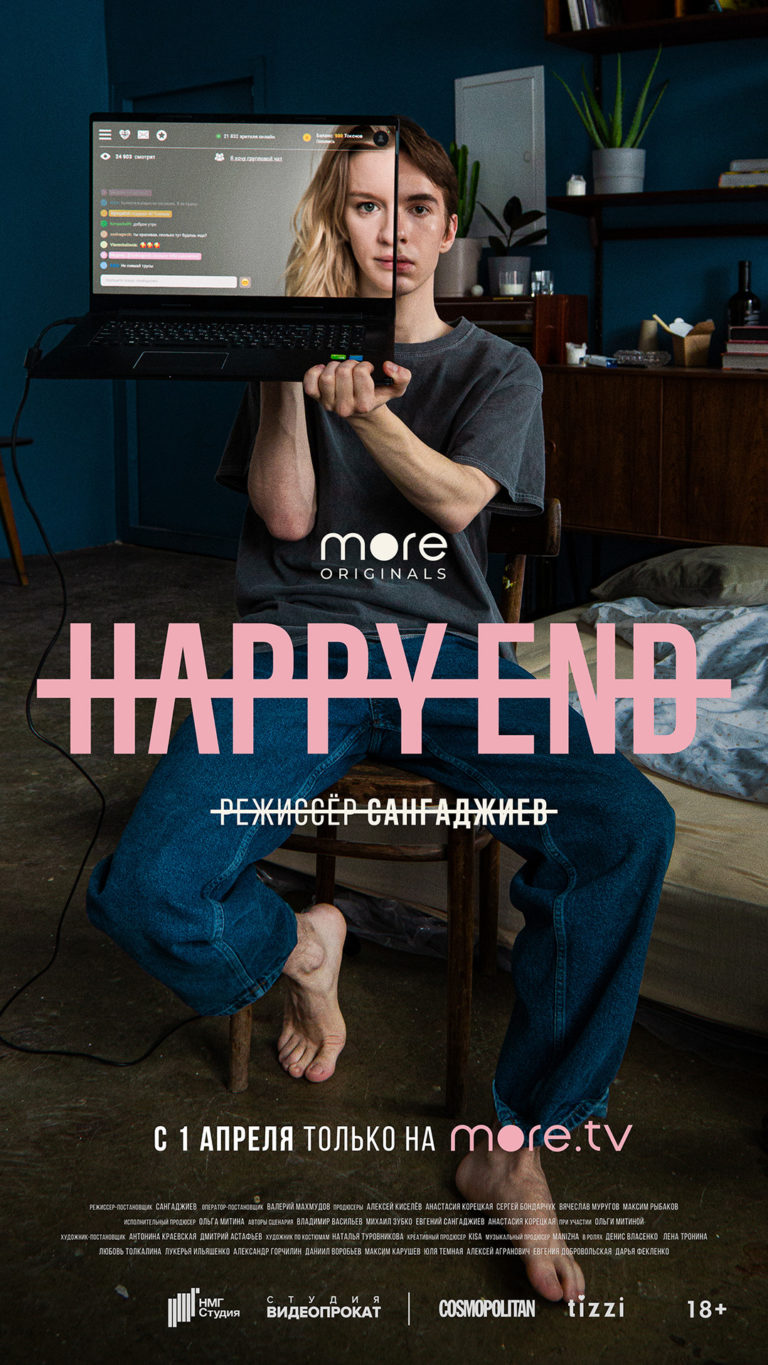
„Sve srećne serije liče jedna na drugu, svaka nesrećna serija nesrećna je na svoj način“ – rekao bi verovatno Lav Tolstoj da je gledao rusku seriju Happy End.
Da bi devojka kaucijom izbavila svog momka dilera iz zatvora, moraće preko noći da sakupi nekoliko hiljada evra putem webcam modelinga, uz pomoć kompjuterskog štrebera. Međutim, kada im neko ukrade ekstazi iz šteka, devojka i štreber beže u Moskvu, ostavljajući dilera na milost i nemilost provincijskoj mafiji kako bi vratio dug za nestalu drogu. Novopečeni Moskovljani ubrzo shvataju da se u metropoli ne može živeti od poštenog, prekarnog rada, pa odlučuju da se ozbiljnije posvete webcam modelingu, što ih uvlači u pornografsku industriju koja takođe ima svoju „mafiju“.
Serija nije savršena i mogla bi biti kraća za dve epizode. Najveći problem je povremeno nestajanje i pojavljivanje momka dilera; nema ga u dve epizode, a onda se iznenada pojavi, pa se stiče utisak da su autori na njega zaboravili. Takođe, njegov tok priče nije dovoljno ispraćen i čini se da služi više kao dramaturški alat nego kao funkcionalan karakter.
Poseban utisak ostavlja sam kraj i dramski upečatljiva radnja koja nosi snažnu dozu ironije u odnosu na prethodna dešavanja i sam naziv serije. Naslov Happy End asocira na žargonski izraz koji u svetu prostitucije (serija se jednim delom bavi pitanjem da li je webcam modeling prostitucija, pornografija ili poseban vid modelinga) označava orgazam nakon masaže. S druge strane, Happy End može označavati i ironičan kraj serije, jer svi sporedni parovi i paralelne priče dobijaju srećan završetak, izuzev glavne priče čiji su nosioci štreber i devojka.
„All happy series are alike; every unhappy series is unhappy in its own way“ — Leo Tolstoy would likely have said, had he watched the Russian series Happy End.
To bail her dealer boyfriend out of jail, a young woman is forced to raise several thousand euros overnight through webcam modeling, aided by a computer geek. However, when their stash of ecstasy is stolen, the girl and the geek flee to Moscow, leaving the boyfriend at the mercy of the provincial mafia to settle the debt for the missing drugs. These newly minted Muscovites soon realize that one cannot survive in the metropolis on honest, precarious labor, so they decide to commit more seriously to webcam modeling—a move that sucks them into a porn industry that has a „mafia“ of its own.
The series is not perfect and could have been two episodes shorter. Its biggest flaw is the disappearance and reappearance of the dealer boyfriend; he vanishes for two episodes and then suddenly pops up, leaving the impression that the writers simply forgot about him. Furthermore, his narrative arc is insufficiently explored, making him feel more like a plot device than a functional character.
What leaves a lasting impression, however, is the finale and a truly dramatic sequence that carries heavy irony regarding both the preceding plot and the title itself. The title Happy End evokes the slang term used in the sex industry (the series partially explores whether webcam modeling is prostitution, pornography, or a distinct form of modeling) to describe a massage ending in an orgasm. On the other hand, Happy End serves as an ironic commentary on the conclusion: while all side characters and parallel storylines receive a „happy ending,“ the main story—centered on the geek and the girl—does not.

 Zlajoteka